
Drain Line Replacement
A camera run through an old drain line will find something. That is not the same as needing to replace all of it.
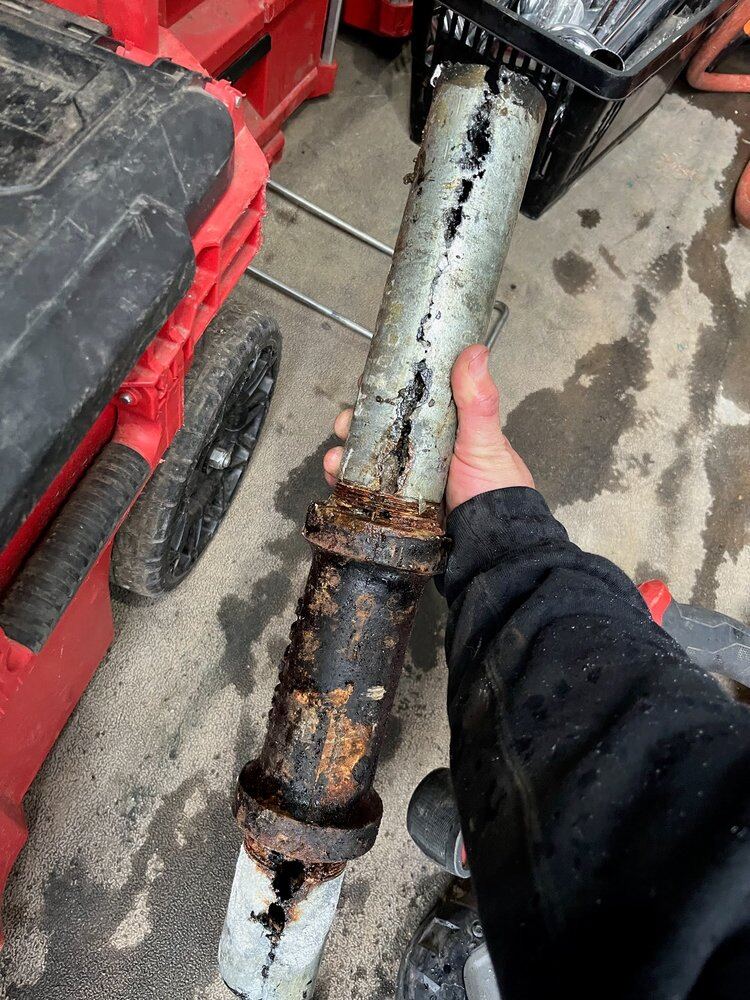
Cast iron was the standard drain material in American homes for most of the twentieth century, and there is a lot of it under older Houston neighbourhoods. It corrodes from the inside, typically along the bottom of horizontal runs, until the channel scales down or the pipe bottom is simply gone.
A camera inspection is the honest first step, because it separates a line that needs cleaning from one that needs replacing — and those look identical from above. It also shows which sections are sound, which matters just as much.
Scope is where this service gets oversold. Condition varies enormously along a single run, and a partial replacement of the failed section is frequently the correct answer. We will show you footage of the sections we think have years left as well as the ones we think do not, and if a contractor only shows you the worst thirty seconds, that is worth noticing.
When this is likely your problem
What's included — and what isn't
Included in the quote
- Camera inspection to establish actual condition
- Identification of failing versus serviceable sections
- Replacement of accessible cast iron with PVC
- Reconnection of fixture branches and vents
- Under-slab replacement where that is the agreed scope
- Post-work camera verification
Quoted separately
- Concrete patching beyond a basic trench fill, and floor finishing
- Drywall, tile, and finish restoration
- Permit and inspection fees
- Building sewer beyond the foundation
- Supply line work, which is separate scope
What drives the number
We quote after diagnosis, not before. These move the number most:
- LOCATIONAccessible runs versus under-slab, which is a different project.
- EXTENTWhole system versus specific failing sections.
- ACCESSCrawlspace clearance or slab access.
- FIXTURESHow many branches tie in and must be reconnected.
Houston note
Houston's flat grade means drain lines here often have less fall to work with than in hillier cities, so bellied sections and chronically slow runs are more common. If a line has always been slow rather than recently become slow, that is frequently the reason and it changes what the repair should be.
Related
What the visit involves
Camera it first
We look before quoting anything, and you get the footage.
Separate failing from sound
Not all of it needs replacing. Some sections have decades left.
Replace in PVC
Failing sections replaced, branches reconnected, then tested.
Verify with the camera
A second run confirms flow and grade before close-up.
Questions about this service
How do I know if mine needs replacing?
A camera inspection is the only honest way. From above, a slow drain looks the same whether it is a soft blockage or a pipe with no bottom left. We show you the footage rather than describing it.
Does the whole system need doing?
Often not. Be cautious of a quote to replace everything based on footage of one bad section. Condition varies along a run and partial replacement is frequently correct.
Can it be lined instead?
Sometimes, depending on condition and configuration. Lining needs an intact host pipe to form against, so a section that has lost its bottom is not a candidate. We will tell you honestly whether yours is.
How disruptive is it?
In a crawlspace, moderate. Under a slab it is a significant project involving breaking concrete inside the house. Those are genuinely different jobs and we describe and price them separately.
Ready to get this looked at?
Call and describe what's happening. You'll get an honest read before anyone drives out.